Home / Countries / Degas - Ballet Dancers
Degas - Ballet Dancers
From the original Art on Stamps archive


Dance is defined as the movement of the body in a rhythmic way, usually to music and within a given space, for the purpose of expressing an idea or emotion, releasing energy, or simply taking delight in the movement itself. Dance is a powerful impulse, but the art of dance is that impulse channeled by skillful performers into something that becomes intensely expressive and that may delight spectators who feel no wish to dance themselves. These two concepts of the art of dance - dance as a powerful impulse and dance as a skillfully choreographed art practiced largely by a professional few - are the two most important connecting ideas running through any consideration of the subject. In dance, the connection between the two concepts is stronger than in some other arts, and neither can exist without the other.

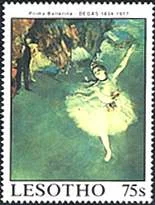
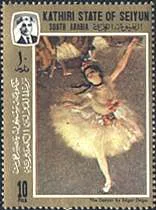
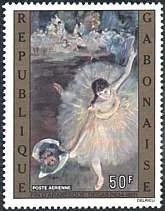


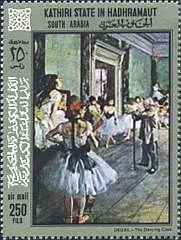
His study of Japanese prints led him to experiment with unusual visual angles and asymmetrical compositions. His subjects often appear cropped at the edges, o r pushed into a corner of the canvas. There were two aspects that interested Degas in the story of the theaters: the faces of those that appreciated the show and the faces of those who produced the show, i.e. the artists. It is the second aspect that is presented on this page.
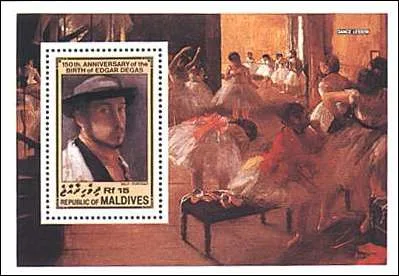
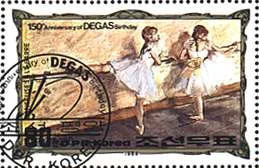
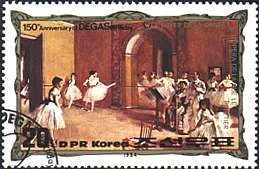
For many superficial observers, Degas is the painter of a scene magic, of a dream reality. Yet, who looks at it more closely sees that it's the imaginary world of the scene, the questionable illusion, the beautiful deception that fascinates him so much. He sees behind the dream the hard work of the lean, not quite grown up yet ballet dancers; he sees the hard work of these artists who were trained more harshly and were tyrannized more than recruits. (Sources: MS Encarta 96, Britannica Online, "Lebensfreude in Bilder grosser Meister" by Paul Nizon, 1969, Editions d'Art Albert Skira, Geneva).