| |
Famous Paintings Liberty Leading the People by Eugène Delacroix |
|
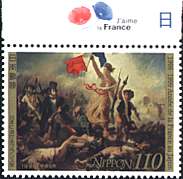
To My Liberty
| |
Famous Paintings Liberty Leading the People by Eugène Delacroix |
|
To My Liberty
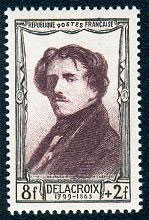
Delacroix, (Ferdinand Victor) Eugène (1798-1863), was a French painter whose work exemplified 19th-century Romanticism and whose influence extended to the Impressionists. Born on April 26, 1798, at Charenton-Saint Maurice, he was trained in the formal Neo-Classical style of the French painter Jacques-Louis David, but he was strongly influenced by the more colorful, opulent style of such earlier masters as Peter Paul Rubens and Paolo Veronese. He also absorbed the spirit of his contemporary Théodore Géricault, whose early works exemplify the violent action, love of liberty, and budding Romanticism of the turbulent post-Napoleonic period.
 |
 |
 |
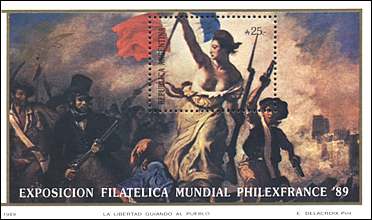
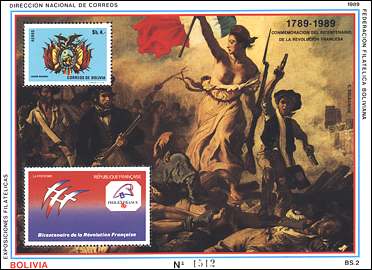
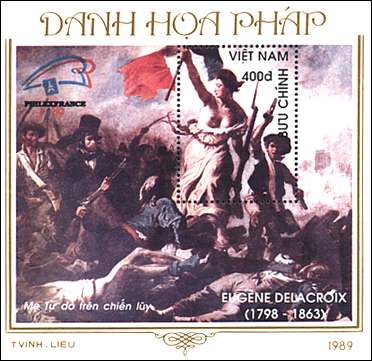
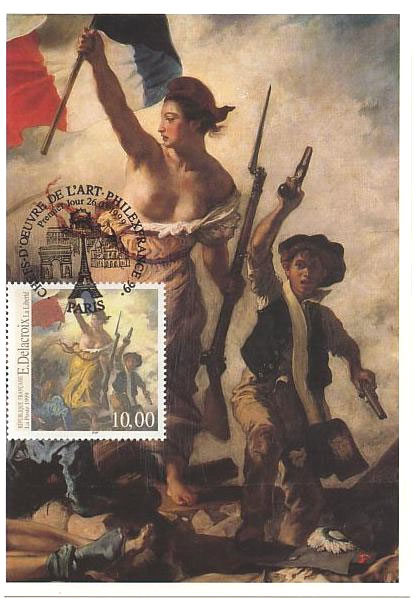
Delacroix's most overtly Romantic and perhaps most influential work is Liberty Leading the People (La Liberté guidant le peuple), a semi-allegorical glorification of the idea of liberty. This work, inspired by the French revolution of July 1830 (known under the name of The Three Glorious Days - les Trois Glorieuses) and painted the same year, is exposed at the Louvre Museum in Paris, France.
 |
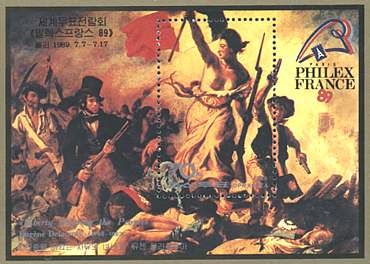 |
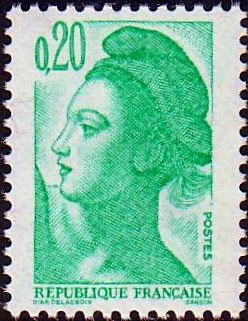
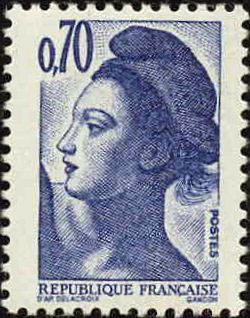
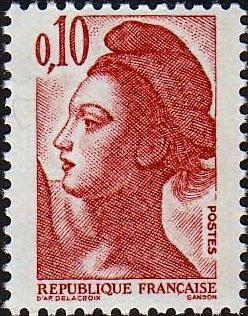
The painting shows a young woman, surnamed Liberty (a noun of feminine gender in French), who is leading the Parisian uprising. Armed with a weapon, firmly held in her right hand, and with the Drapeau Tricolore (the flag of the earlier revolution of 1789) in the right one, she seems to be fully protected by her splendid femininity, by her charm and by her firm convictions. Nobody can resist so much her impetuous appeal as the courage of fighters she leads. For that epoch, the painter has taken himself a lot of freedom by showing on barricades an attractive, half naked woman, followed by fully dressed men, strengthening in this way the force of the symbol.
|
|
Even if misused by some oppressive political systems, this painting symbolizes one of fundamental human rights every person is born with, the right to his own liberty, and consequently the right to freedom of all human beings. This right is not automatically assured and sometimes has to be conquered or re-conquered by citizens, using the argument of arms, as shown in this impressive painting.
Delacroix's technique, in which he applied contrasting colors with small strokes of the brush, creating a particularly vibrant effect, was an important influence on the Impressionists. He is also well known for his Journals, which display considerable literary talent and express his views on art, politics, and life. Delacroix died in Paris on August 13, 1863.Link: French Painting
| Published:
7/23/2000. Revised:
01/31/09
.
Copyright © 2000 - 2010 by Victor Manta, Switzerland. All rights reserved worldwide. |
|
